How to Use Facebook Ads to Target Equity-Rich Homeowners and Fill Your Listing Pipeline
Real Estate Marketing, Facebook Ads, Listing Lead Generation
How to Use Facebook Ads to Target Equity-Rich Homeowners and Fill Your Listing Pipeline
In a market where inventory is tight and competition for quality listings is intense, equity-rich homeowners are your most valuable opportunity. This guide in The Equity Edge series shows you how to use Facebook ads strategically to attract those owners, start conversations about upsizing, and consistently feed your listing pipeline with motivated, high-quality seller leads.

Why Facebook Is a Powerhouse for Reaching Equity-Rich Homeowners
Facebook (and Instagram, via Meta Ads) remains one of the most effective ways to get in front of equity-rich homeowners at scale. While platforms constantly evolve, several realities in 2026 make Facebook uniquely powerful for listing-focused agents.
Massive reach among the generations that hold the most equity
Equity-rich homeowners today skew older. Baby boomers, ages 61–79, represent about 42% of buyers and 55% of sellers, and they hold the bulk of housing equity in the U.S. according to NAR. Many of these owners have seen six figures of appreciation over the last several years, with the typical homeowner accumulating over $120,000 in housing wealth since 2019, and even more in high-growth markets like Austin or Miami.
Crucially, this same demographic is highly active on Facebook. They may not be spending hours on TikTok, but they are scrolling Facebook daily—engaging with local news, neighborhood groups, and family updates. That makes Facebook the ideal place to put targeted, value-driven seller messaging directly in front of them, without relying on cold calls or door knocking alone.
Deep targeting and data-driven delivery
Although Meta has tightened certain targeting options for privacy reasons, its ad system still offers powerful ways to reach the right homeowners. You can combine:
- Location targeting at a radius level (required for housing-related campaigns) to focus on your exact service area or specific high-equity ZIP clusters.
- Custom Audiences built from your own database—past clients, sphere, website visitors, and people who have engaged with your content.
- Lookalike Audiences based on those high-quality lists, allowing Meta’s algorithm to find more people who behave like your best sellers.
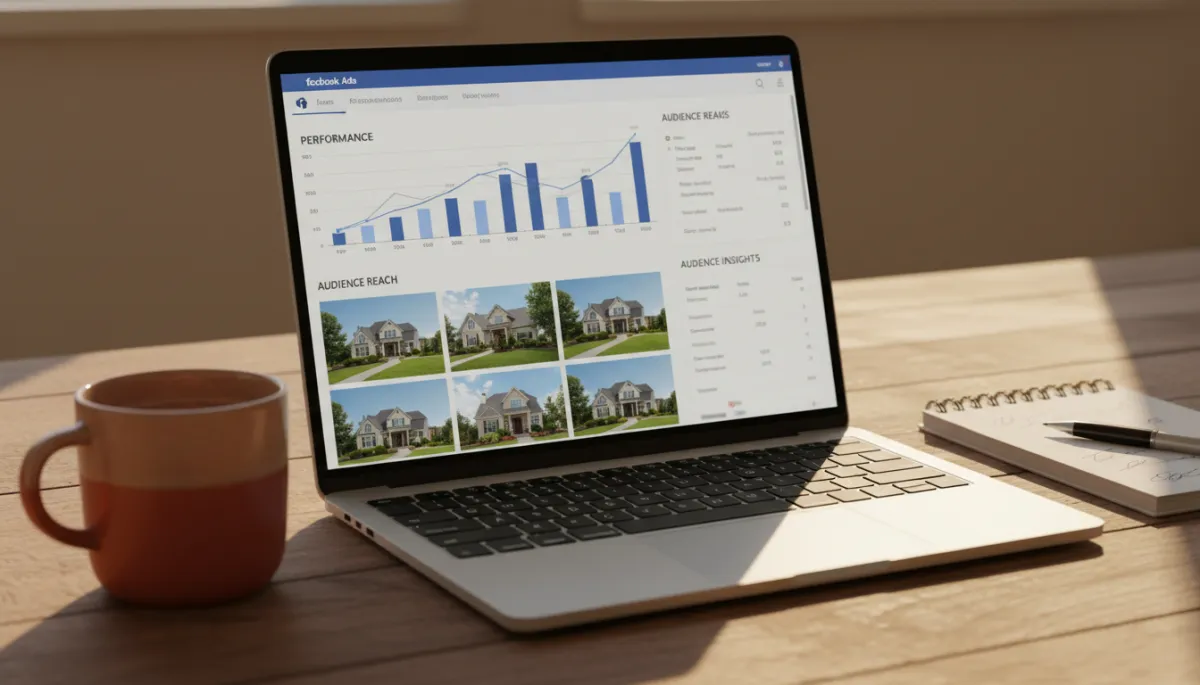
Meta’s newer Advantage+ Audience tools use AI to expand beyond your manual inputs, treating them as signals rather than strict rules. For campaigns with good conversion data, this can improve cost per lead by 7–15% across the funnel, according to Meta’s own benchmarks. For you, that means more equity-rich homeowners seeing your ads at a lower cost, as long as your creative and offers are strong.
-toned close-up of a laptop on a wooden desk displaying a Facebook Ads dashboard with graphs and...
Building the Right Custom and Lookalike Audiences for Equity-Rich Sellers
The most effective Facebook campaigns for listings start with strong audiences. Instead of guessing who might be interested in selling, you let your own first-party data guide Meta’s algorithm toward people who look and act like your best past clients.
Step 1: Prepare a clean past-client and homeowner list
Start by exporting a CSV from your CRM or email platform with the following fields wherever possible:
- First and last name
- Email address (personal preferred over work)
- Mobile phone number (with country code if available)
- City, state, and ZIP/postal code
Clean up duplicates and obvious errors. The more accurate your data, the higher your match rate when you upload it to Meta—typically 30–70% for good lists. For The Equity Edge strategy, focus especially on:
- Owners you helped buy 5+ years ago in your market (likely strong equity).
- Move-up and luxury buyers who now own significant assets and may be ready to upsize again or right-size.
Step 2: Create Custom Audiences from your data and engagement
Inside Ads Manager, create Custom Audiences using:
- Customer list uploads – your past clients, sphere, and homeowner lists. These are your “warmest” equity-rich prospects, perfect for market update and equity calculator offers.
- Website visitors – especially those who visited your home valuation, seller guide, or “What’s My Home Worth?” pages. Use the Meta Pixel and Conversions API to track them accurately.
- Engagement audiences – people who watched your listing videos, opened a lead form, or interacted with your Facebook or Instagram content in the last 90–365 days.
These Custom Audiences are ideal for mid- and bottom-funnel campaigns: retargeting people who already know you with specific calls to action like “Get your personalized equity review” or “See what your home could sell for in today’s market.”
Step 3: Build Lookalike Audiences to scale your reach
Once your seed audiences are in place, create Lookalike Audiences based on:
- Your past seller and move-up buyer list (this is often your highest-quality seed).
- Website visitors to seller-focused pages.
- People who submitted a home valuation or equity review form.
Limit the Lookalike percentage (for example, 1–3%) and constrain it geographically to your market. This tells Meta, “Find more people like my best sellers, but only within my service area.” In 2026, Meta’s Advantage+ systems will often expand beyond your Lookalike boundaries based on performance, but starting with a high-quality seed dramatically improves the algorithm’s ability to find equity-rich prospects.
Ad Formats and Creative That Resonate with Equity-Rich Homeowners
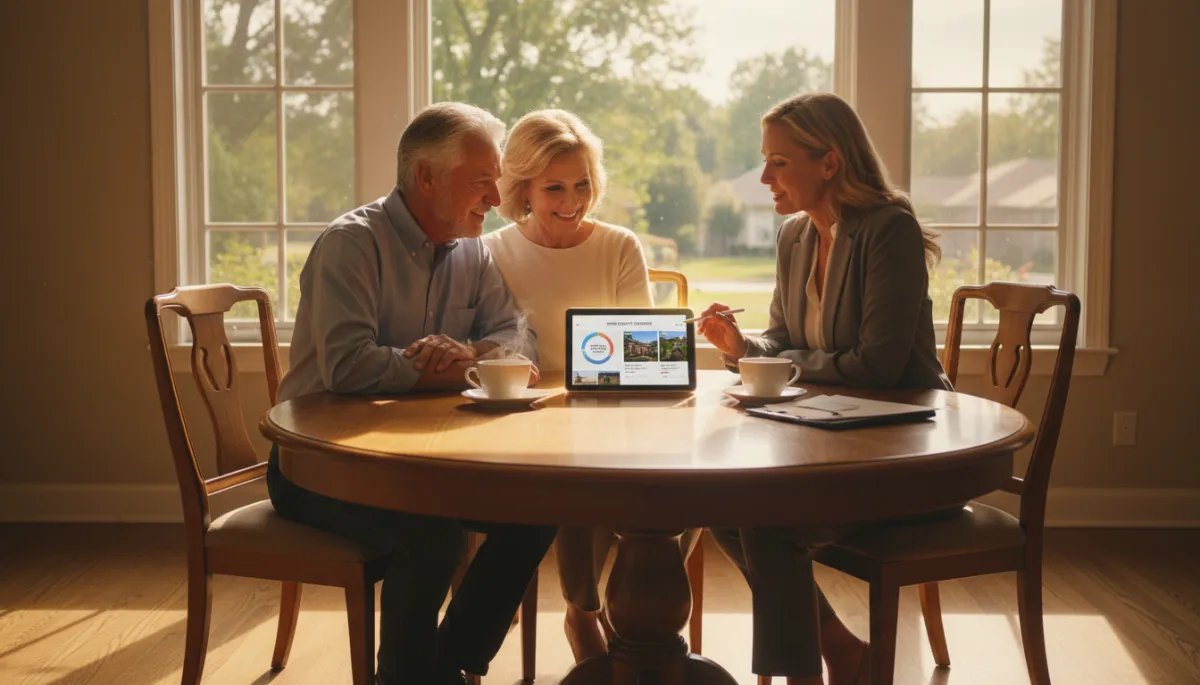
With audiences in place, your next lever is creative. Equity-rich homeowners are not responding to generic “Thinking of selling?” posts. They respond to clear, value-first messaging that helps them understand their options, protect their wealth, and move confidently into a better home or lifestyle.
-toned image of a mature couple sitting with a real estate agent at a dining table, reviewing a...
Recommended Facebook ad formats for listing-focused campaigns
- Video ads – Short, vertical-friendly videos (15–45 seconds) with you on camera explaining local market shifts, equity opportunities, or a recent “equity unlock” story. Video builds trust quickly and performs well in feeds and Stories.
- Carousel ads – Use multiple cards to show “Before & After” equity stories, recent listings sold, or steps in your equity review process. Each card can link to your seller landing page or lead form.
- Lead generation ads – Native Facebook lead forms reduce friction by allowing homeowners to submit contact details without leaving the app. These are powerful for mid- and bottom-funnel offers like equity calculators and market update opt-ins.
Value-first messaging that cuts through the noise
Equity-rich homeowners are not desperate to sell. They are selective, thoughtful, and often comfortable where they are. Your creative must respect that and lead with insight, not pressure. Consider these proven angles:
- Equity calculator hooks – “You may have gained more than $150,000 in home equity since 2019. Find out how much of that you can use to upsize without increasing your monthly payment.”
- Local market update ads – “In <Your City>, equity-rich owners are still selling above list price in key neighborhoods, even as the broader market cools. Get a three-page report on how your street compares.”
- Case study storytelling – “Mark and Linda bought in 2014. This spring, we helped them unlock $420,000 in equity and move into their ‘forever’ home—without contingent offers or double payments. See how we structured their move.”
Use warm, confident imagery: real homes in your market, lifestyle shots of families enjoying more space, and you as a calm advisor. Avoid stocky, overly polished photos that feel generic or disconnected from your brand.
Structuring a Simple Facebook Ad Funnel from Awareness to Lead Capture
The most reliable way to turn Facebook impressions into listing appointments is to think in terms of a funnel. Instead of expecting a cold homeowner to click one ad and book a listing consultation, you warm them up step by step—building familiarity, trust, and curiosity about their equity position.

-toned overhead shot of a real estate agent sketching a simple three-stage marketing funnel on a...
Stage 1: Awareness – Market education and authority building
Objective: Get in front of equity-rich homeowners and position yourself as the local expert who understands their situation. Use:
- Short video ads summarizing the current equity landscape in your city, using simple visuals and plain language.
- Carousel ads featuring “3 ways equity-rich owners are moving up in <Your City> in 2026.”
Target: Lookalike audiences of past sellers and move-up buyers, plus broad Advantage+ targeting within your geographic radius. At this stage, you are not asking for contact information—your goal is reach and video views at the lowest cost.
Stage 2: Consideration – Equity tools and deeper engagement
Objective: Move interested homeowners from passive awareness into active curiosity about their own equity and options. Here, you offer:
- A simple equity calculator or “instant home value” tool on your site, framed as a first step in a more detailed review.
- A downloadable “Equity-Rich Homeowner’s Guide to Upsizing in <Your City>” in exchange for email and phone number.
Use traffic or lead generation campaign objectives, and retarget:
- People who watched 25–50% of your awareness videos.
- Website visitors to your seller-related pages in the last 90–180 days.
Stage 3: Conversion – Personal equity reviews and listing conversations
Objective: Turn warm leads into booked consultations and signed listings. Your offers here should be highly specific and personal, for example:
- “One-on-one 20-minute Equity Strategy Call” to map out whether it makes sense to move in the next 12–24 months.
- “Customized Move-Up Plan” that shows what they can buy, where, and how, using their current equity as leverage.
Use lead generation or conversion-focused campaigns to retarget:
- People who submitted a valuation or downloaded your guide but have not yet booked a call.
- Past clients and sphere from your Custom Audiences, reminding them you are available to review their equity position.
Budget Guidance for Agents Getting Started with Facebook Seller Ads

-toned scene of a real estate agent at a cafe table, calculator and printed Facebook ad reports...
You do not need a huge budget to test and validate a Facebook strategy for equity-rich homeowners, but you do need enough to exit the “random boost” phase and let Meta’s algorithm learn. Think in terms of monthly commitments and 90-day test cycles, not one-off campaigns.
Suggested starting budget structure (per month)
- $300–$500 for solo agents in smaller markets who are just starting with Facebook ads and have limited data.
- $750–$1,500 for agents or small teams in mid-size to large metros who want to generate a steady flow of equity-focused seller leads.
Allocate your spend roughly as follows:
- 40–50% to awareness campaigns (video and carousel ads) aimed at your Lookalike and Advantage+ audiences.
- 30–40% to consideration campaigns (equity calculators, guides, traffic to seller pages).
- 20–30% to conversion campaigns (lead forms, strategy calls, personal equity reviews).
Following Up with Facebook Leads to Convert Them into Listings

-toned image of a real estate agent in a modern home office making a phone call while viewing a...
Generating leads is only half the equation. Equity-rich homeowners are cautious and have options. How you follow up—both in speed and in substance—determines whether that Facebook lead turns into a signed listing agreement or quietly disappears.
Step 1: Respond fast and reference their specific action
Aim to respond to new Facebook leads within 5–15 minutes during business hours, and within a few hours otherwise. Use a combination of:
- An automated text or email confirming you received their request (“Thanks for requesting your equity review…”).
- A quick personal video or voicemail introducing yourself and setting expectations for next steps.
Reference the exact offer they responded to. For example, “You requested our 3-page equity report for your home in <Neighborhood>. I’m putting that together now—could I ask two quick questions to make it more accurate?” This immediately signals that your response is tailored, not generic.
Step 2: Deliver real value before pushing for an appointment
Equity-rich homeowners are wary of hard sells. Focus first on delivering the value you promised:
- A concise, visually clear equity report with recent comparable sales, estimated price range, and net proceeds after typical costs.
- A short Loom-style video walking through their numbers and highlighting two or three realistic options (upsize locally, move to a lower-cost area, keep current home as a rental, etc.).
Only after you have provided this value should you invite them to a deeper conversation. For example: “If you’d like, we can schedule a 20-minute call to talk through which option fits your timeline and comfort level best.”
Step 3: Nurture over 6–12 months with relevant, equity-focused content
Many equity-rich homeowners will not move immediately. Build an email and remarketing nurture plan that keeps you front-of-mind until timing aligns. Include:
- Monthly or quarterly local market updates focused on equity trends in their neighborhood, not just generic stats.
- Stories of other equity-rich clients you helped upsize or right-size, including how you structured financing and timing to minimize stress.
- Occasional check-ins offering to update their equity estimate or explore new opportunities if rates or prices shift.
Continue to retarget these leads on Facebook and Instagram using Custom Audiences of your email list and website visitors. When they are finally ready to make a move, you will be the professional they already know, like, and trust.
Bringing It All Together: The Equity Edge Playbook for Facebook Ads
Equity-rich homeowners are driving much of today’s housing activity, even as overall equity levels have softened slightly and underwater rates have ticked up in some regions. They have options, they have wealth tied up in their properties, and they are looking for guidance—not gimmicks—on how to use that equity wisely to improve their lifestyle.
Facebook remains one of the most efficient ways to reach them where they already spend time. By combining strong Custom and Lookalike Audiences, value-first creative, and a simple three-stage funnel, you can transform Facebook from a “nice-to-have” marketing channel into a predictable engine for listing opportunities.
Start with a realistic 90-day budget, commit to testing and refining your audiences and messages, and treat every lead as the beginning of a relationship, not a one-off transaction. When you do, your Facebook campaigns will not only fill your pipeline with more listings—they will position you as the go-to advisor for equity-rich homeowners navigating one of the most important financial decisions of their lives.
