How to Farm Neighborhoods with the Highest Home Equity Concentrations
Real Estate Farming, Home Equity, Lead Generation
How to Farm Neighborhoods with the Highest Home Equity Concentrations
Equity-rich homeowners are some of the most motivated and profitable clients you can serve. When you learn to systematically identify and farm neighborhoods with the highest concentrations of home equity, you position yourself as the local authority who helps owners unlock their next chapter—whether that means upsizing, downsizing, or investing. This guide walks real estate agents through a practical, data-driven approach to building a geographic farming strategy centered on high-equity areas and converting that insight into consistent listings and long-term market dominance.
Why Equity-Rich Neighborhoods Should Be Your Primary Farm
Homeowners with substantial equity have options—and options create motivation. They can: move up without stretching their budget, downsize and free cash, or reposition into investment properties. By concentrating your farming on these owners, you increase the likelihood that your marketing reaches people who can actually transact and benefit from doing so. Instead of blanketing broad areas with generic messages, you focus on segments where equity, timing, and financial capability intersect.
1. How to Identify High-Equity Neighborhoods Using Data
The foundation of an equity-focused farming strategy is accurate, layered data. Rather than guessing which areas “feel” affluent, you can quantify equity concentrations and prioritize the neighborhoods with the greatest listing potential. This requires combining several data sources into a clear picture of homeowner wealth and mobility.
Analyze Public Records and AVMs for Equity Estimates
Start by pulling property tax records and mortgage information where available. Many title companies and data providers can supply:
- Original purchase price and purchase date
- Recorded loan amounts and refinance history
- Estimated property values from automated valuation models (AVMs)
With these inputs, you can approximate equity by comparing current value to outstanding loan balances. While individual estimates may not be perfect, patterns across entire subdivisions or ZIP+4 segments are highly instructive. Focus on pockets where a large percentage of homes show estimated equity of at least 40–50% or more.
Layer in Tenure, Turnover, and Appreciation Trends
Equity alone does not guarantee movement. Some owners are happy to stay put for decades. To refine your target, add three additional metrics:
- Length of ownership: Owners who have been in their homes 7–15 years typically have strong equity and are entering common transition phases—empty nesting, career changes, or lifestyle shifts.
- Historic turnover rate: Study how frequently homes in a neighborhood sell. A high-equity area with a healthy turnover rate is ideal, while extremely low turnover may signal long-term “forever” owners.
- Price appreciation: Neighborhoods that have outperformed the broader market often hold significant unrealized gains that homeowners are not fully aware of—an opportunity for education-based marketing.

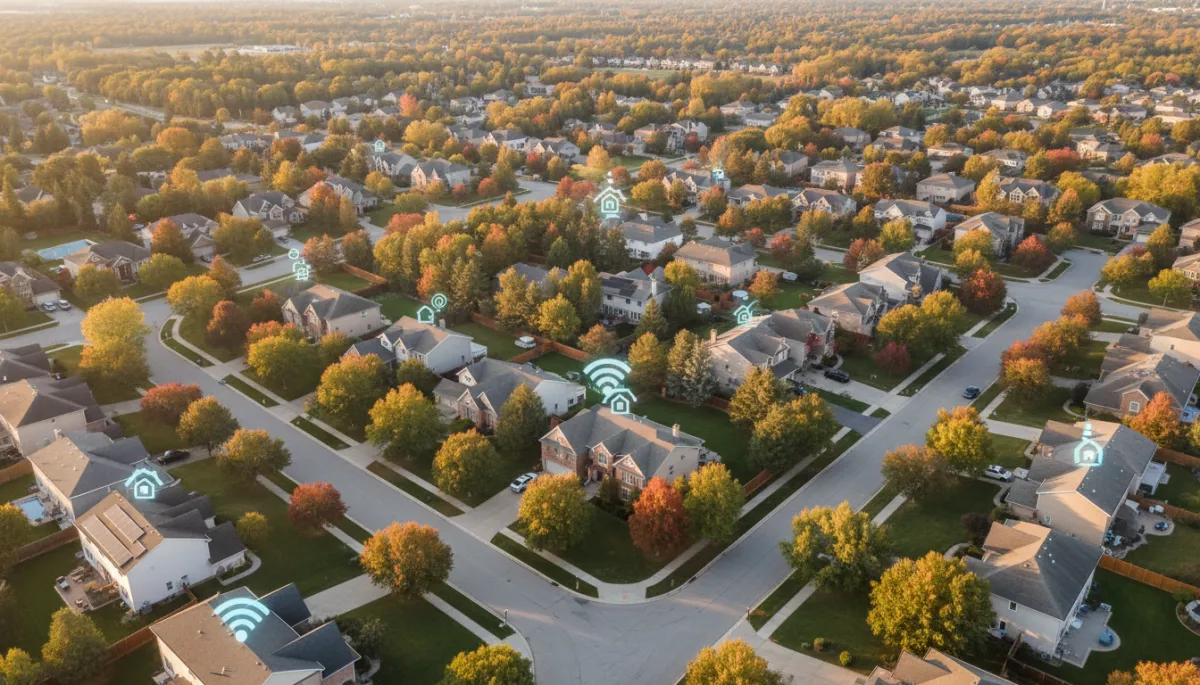
Layering equity, tenure, and turnover data reveals the most promising farm areas.
Use Demographic and Lifestyle Indicators Thoughtfully
Demographic data can help you refine your messaging and anticipate life events that trigger sales. For example, areas with a high concentration of older homeowners may be ripe for downsizing conversations, while neighborhoods with rapidly growing families may respond to move-up narratives. Use these insights to inform your strategy, while always adhering to fair housing laws and avoiding any discriminatory targeting or language in your marketing.
2. Designing a Systematic Geographic Farm Around Equity-Rich Areas
Once you have identified clusters of high-equity homes, the next step is to define a farm that is both strategically valuable and operationally manageable. The goal is not to cover the largest area possible, but to build deep familiarity and trust within a carefully chosen territory where each contact has a high probability of converting over time.
Right-Size Your Farm for Consistent, High-Quality Touches
A common mistake is selecting too many households and then struggling to maintain meaningful frequency. Instead, work backward from your capacity and budget. Ask:
- How many mail pieces can I reliably send each month for 12–18 months?
- How many doors can I realistically knock or visit quarterly?
- How many equity reviews or homeowner consultations can I conduct per week?
A tight, 300–800 home farm in a high-equity pocket is often more productive than a sprawling, 2,000-home territory that receives sporadic attention. The key is repetition and depth of relationship, not raw household count.
Segment Within Your Farm by Equity and Tenure
Treat your farm not as a monolithic block but as a set of segments with different motivations. For example:
- Owners with 50%+ equity and 10+ years of tenure may be ideal for downsizing, cash-out, or relocation messaging.
- Owners with 30–50% equity and growing families may be ready for move-up opportunities within or just beyond the neighborhood.
- Owners who recently paid off mortgages may be candidates for investing in additional properties using their equity as leverage.
This segmentation allows you to tailor your messaging and offers, making each touch feel more relevant and consultative instead of generic or sales-driven.
A focused, right-sized farm lets you build real familiarity on every street.
Build a 12-Month Equity-Focused Farming Calendar
Consistency turns data into market share. Map out a full year of activity that combines mail, in-person contact, digital presence, and educational events. For example:
- Monthly: Equity-focused postcard or newsletter with local market stats and recent sales showing equity gains.
- Quarterly: Door-knocking or neighborhood walk to deliver equity reports or invite owners to a “State of Your Equity” workshop.
- Twice per year: Community event sponsorship or small homeowner appreciation event that keeps your brand anchored locally.
Treat this calendar as non-negotiable. Over time, homeowners will begin to perceive you as a permanent feature of the neighborhood landscape rather than a transient marketer.
3. Marketing Touchpoints That Work Best in Equity-Rich Farms
In equity-dense neighborhoods, the most effective marketing touchpoints are those that educate, quantify value, and invite conversation. Your objective is to move homeowners from vague awareness—“I know my home is worth more now”—to specific understanding—“I have $450,000 in equity and a clear set of options.” The more clarity you provide, the more you become indispensable.
High-Impact Print: Equity Reports and Market Updates
Well-designed print pieces remain powerful in geographic farming, especially when they go beyond generic branding. Consider:
- Personalized equity estimates: Mail pieces that show a range of potential equity for the recipient’s specific property type, along with an invitation to request a detailed, no-obligation equity review.
- Quarterly “Equity Snapshot” newsletters: Short, data-rich updates highlighting average equity gains in the neighborhood, recent sales, and case studies of homeowners who successfully leveraged their equity.

Tangible, data-driven print pieces make equity feel real and actionable for owners.
Digital Presence: Hyper-Local Equity Content and Retargeting
Pair your offline efforts with a strong digital footprint tailored to your farm. Effective tactics include:
- A dedicated neighborhood equity landing page where homeowners can request a custom equity analysis or download a short guide on “Three Ways to Use Your Home Equity Without Overextending.”
- Social media posts featuring local sales, equity growth charts, and short videos explaining concepts like cash-out refinances, bridge loans, or move-up strategies in plain language.
- Retargeting ads that follow visitors who land on your equity page, reminding them of your offer for a detailed consultation.
In-Person Touches: Equity Consultations and Workshops
Nothing replaces face-to-face interaction when you are building a reputation as the local equity expert. Consider:
- Offering one-on-one equity and move planning sessions where you review a homeowner’s goals, current equity position, and potential scenarios—move-up, downsize, or invest—without pressure to list immediately.
- Hosting small “State of Your Equity” workshops in community centers, clubhouses, or even virtually, ideally co-hosted with a trusted lender or financial professional for added credibility.

Consultative equity reviews build trust long before a sign ever goes in the yard.
4. How to Measure Results in an Equity-Focused Farm
A disciplined farmer tracks more than just closed deals. To refine your strategy and justify ongoing investment, you need a simple measurement framework that captures leading indicators, engagement, and ultimate return on effort.
Track Leading Indicators of Momentum
Before listings materialize, you should see signs that your message is resonating. Monitor:
- Number of equity report requests or home valuation inquiries from your farm each month.
- Attendance at workshops or consultations, and how many attendees convert into active prospects in your database.
- Engagement with your digital content from farm residents—page visits, video views, social interactions, and email open rates.
Measure Market Share and Equity Capture Over Time
Ultimately, your goal is to list and sell a growing share of the neighborhood’s equity. Every quarter, review:
- Total number of listings taken in your farm versus total listings taken by all agents, and your resulting market share percentage.
- Total sales volume you have closed in the farm, which approximates the amount of equity you have helped homeowners convert into new opportunities.
Track these metrics for at least 12–24 months. Geographic farming is a compounding strategy; early results may feel modest, but consistent effort in the right equity-rich areas tends to accelerate over time as your reputation solidifies.

Simple, consistent tracking turns farming from guesswork into a predictable growth engine.
Calculate Return on Investment and Refine Your Approach
At least annually, compare your total spend on the farm—print, events, digital ads, and time invested—to the gross commission income generated from that territory. This simple ROI calculation will tell you whether to:
- Double down on a high-performing farm and potentially expand its boundaries.
- Adjust your messaging, frequency, or mix of touchpoints if engagement is strong but conversions are lagging.
5. Becoming the Go-To Equity Expert and Dominating Your Farm
Dominating a neighborhood as the equity expert is less about flashy marketing and more about sustained, visible expertise. You want your name to be the first that comes to mind when any homeowner wonders, “What is my home really worth, and what could I do with that equity?” Achieving this requires authority, visibility, and proof.
Lead with Education, Not Just Promotion
Make education your primary currency. Offer resources such as:
- A concise “Equity Playbook for [Neighborhood Name] Homeowners” that explains common strategies—move-up, downsize, invest—and outlines pros and cons of each approach.
- Regular video or email updates translating market shifts into plain-language explanations of how local equity positions are changing.
When homeowners repeatedly receive clear, unbiased information from you, they begin to view you as an advisor rather than a salesperson, which dramatically increases your influence when the time to list arrives.
Build Strategic Partnerships That Reinforce Your Expertise
Collaborate with professionals who complement your equity-focused approach, such as lenders, financial planners, and tax advisors. Co-branded workshops, joint content, and coordinated consultations help you:
- Provide more comprehensive guidance on how equity decisions affect financing, retirement, and tax implications.
- Borrow credibility from established professionals, especially when you are building your presence in a new farm.
Showcase Proof of Success within the Neighborhood
Social proof is powerful, particularly when it is hyper-local. Highlight stories of neighbors you have helped:
- Before-and-after case studies showing how a homeowner leveraged equity to buy a larger home, fund education, or accelerate retirement plans.
- Just-listed and just-sold cards emphasizing the equity unlocked, not just the sale price—for example, “Helped the Smiths convert 18 years of equity into their dream lake home.”
Visible, equity-focused success stories signal to neighbors that you deliver real results.
Maintain a Long-Term Mindset and Presence
True dominance in an equity-rich neighborhood comes from staying power. Many agents start strong and then drift away when immediate results do not materialize. To stand apart:
- Commit to your farm for a minimum of 18–24 months before fully evaluating its potential, assuming your data selection was sound.
- Continue showing up at neighborhood events, supporting local causes, and providing value even when you are busy with active clients elsewhere.
Over time, your consistent presence, combined with your equity-focused messaging and results, will make you the default choice for homeowners ready to explore their options.
Final Thoughts: Turning Equity Insights into a Sustainable Listing Pipeline
Farming neighborhoods with the highest home equity concentrations is a disciplined, data-driven way to build a resilient real estate business. By identifying equity-rich pockets, designing a focused geographic farm, deploying educational and consultative marketing touchpoints, and rigorously measuring your progress, you create a system that consistently puts you in front of the most capable and motivated homeowners in your market.
For real estate agents willing to commit, the payoff is substantial: a steady stream of listings, stronger average sales prices, deeper client relationships, and a reputation as the professional who helps local families turn home equity into meaningful life upgrades. Start with the data, build a clear plan, and execute with patience. In a few years, you may find that your equity-focused farm has become the cornerstone of your entire business.
