
How to Build a Pipeline of Move-Up Buyers Using Home Equity Data
Real Estate, Lead Generation, Move-Up Buyers, Home Equity Data
How to Build a Pipeline of Move-Up Buyers Using Home Equity Data
Move-up buyers are often your most profitable clients: they typically have substantial equity, strong motivation, and the potential to both sell and buy with you. Yet most agents still rely on luck and referrals to find them. By systematically using home equity data, you can build a predictable pipeline of move-up buyers and position yourself as the obvious advisor when they are ready to act.
Why Home Equity Data Is the Key to Move-Up Buyer Pipelines
Move-up buyers are usually current homeowners who have outgrown their property, improved their income, or changed their lifestyle. The common denominator is equity. When owners cross certain equity thresholds, a move becomes financially realistic, not just aspirational. If you know who has equity, where they are, and when their life stage suggests a change, you can proactively start the right conversations long before they raise their hand online.
Building a move-up buyer pipeline with equity data is not about complicated algorithms. It is about combining reliable data sources, disciplined CRM segmentation, consistent outreach cadences, compelling lead magnets, and clear conversion strategies into one repeatable system. The following framework is designed for real estate professionals who want a professional, scalable approach rather than one-off marketing tactics.
Step 1: Choose and Combine the Right Home Equity Data Sources
Your system is only as strong as the data that powers it. To identify high-equity homeowners with move-up potential, focus on a mix of public records, valuation tools, and behavioral indicators. You do not need every data source on the market, but you do need a small, reliable stack you can access consistently.
Core equity-related data sources
- County tax and deed records: Use public records to identify purchase dates, original purchase prices, and mortgage documents. Properties purchased 7–12 years ago often have significant equity and are entering typical move-up timelines for many households.
- Automated valuation models (AVMs): Tools from your MLS, title partners, or third-party providers help you estimate current property values at scale. While not perfect, AVMs give you a consistent starting point to approximate equity across your farm area.
- Mortgage and lien data: Many data providers offer estimated current loan balances or at least original loan amounts and dates. Combined with AVM values, this allows you to model likely equity positions and identify owners with 40–60% equity or more.
Behavioral and lifestyle data that signal move-up potential
- Household composition indicators: School enrollment changes, local demographic data, or even social signals (such as growing families) can suggest that owners are outgrowing their current space and may be ready to trade up if equity allows it.
- Online behavior: Website visitors who use your home valuation tools, download equity guides, or frequently browse higher-priced listings are often quietly exploring a move-up scenario. Tag these behaviors in your CRM as early buying signals.

A clean, well-structured equity list is the foundation of every move-up campaign.
Step 2: Segment Your CRM Around Equity and Motivation
Once you have access to equity insights, the next step is to bring that data into your CRM and organize it in a way that supports targeted, relevant communication. Generic newsletters sent to everyone will not generate a steady stream of move-up buyers. Segmentation allows you to tailor your message, timing, and offers to the specific situation of each homeowner.
Practical equity-based segments to create in your CRM
- High-equity, long-term owners: Owners with 50%+ estimated equity who have been in the home 10+ years. These are prime candidates for downsizing or lifestyle upgrades and often need education on how much purchasing power they actually have.
- Growing-family move-up candidates: Owners with 30–60% equity, 5–10 years in the home, and properties in entry-level or mid-tier price points. Many in this group are quietly considering more space, better schools, or different neighborhoods.
- Equity-rich but payment-sensitive owners: Owners who bought at lower rates and are concerned about higher payments if they move. They require messaging that addresses financing strategies, rate buydowns, and creative ways to leverage equity without overextending.
Tagging and fields to support intelligent follow-up
- Create custom fields for estimated equity band (for example: 0–20%, 20–40%, 40–60%, 60%+) and years in home. These fields allow you to filter and build campaigns around specific combinations of equity and tenure.
- Use tags such as “Move-Up Curious,” “Requested Equity Review,” or “Attended Move-Up Workshop” to track engagement with your equity-focused content and events. Over time, these tags help you prioritize the warmest opportunities.

Thoughtful segmentation turns a static database into a dynamic move-up opportunity engine.
Step 3: Design Outreach Cadences That Respect the Homeowner Journey
Equity alone does not create a move-up buyer. Your outreach needs to align with how homeowners actually make decisions: slowly at first, with more urgency once they see a clear path forward. Structured outreach cadences ensure you stay top of mind without feeling pushy or random.
A three-phase outreach framework
- Awareness phase (months 1–3): Light, educational touchpoints that introduce the idea of leveraging equity. Send quarterly equity update emails, postcards with neighborhood appreciation statistics, and social content that highlights real move-up success stories from your market.
- Consideration phase (months 4–9): Deeper, more personalized outreach for homeowners who engage with your content. This includes invitations to schedule an equity and move-up strategy session, targeted letters showing estimated sale proceeds, and phone calls offering tailored scenarios based on their goals.
- Decision phase (when they raise their hand): High-touch, time-sensitive follow-up once a homeowner responds, downloads a guide, or requests a valuation. At this stage, use a tighter cadence of calls, texts, and emails over 10–14 days to secure an in-person or virtual consultation.
Example monthly outreach cadence for high-equity owners
- Week 1: Email with a personalized estimated equity update and a short explanation of what that equity could buy in today’s market (for example, “Your equity may cover 20% down on a home up to $X”).
- Week 2: Direct mail piece or handwritten note referencing the email and inviting them to a “What Could Your Equity Do Next?” webinar or in-person workshop.
- Week 3: Follow-up text or call to those who opened the email or visited your valuation page, offering a no-pressure, 15-minute equity review call tailored to their property and goals.
- Week 4: Educational social media content or a brief video sent by email explaining a specific move-up strategy (for example, selling first, buying first with a bridge loan, or converting the current home to a rental).
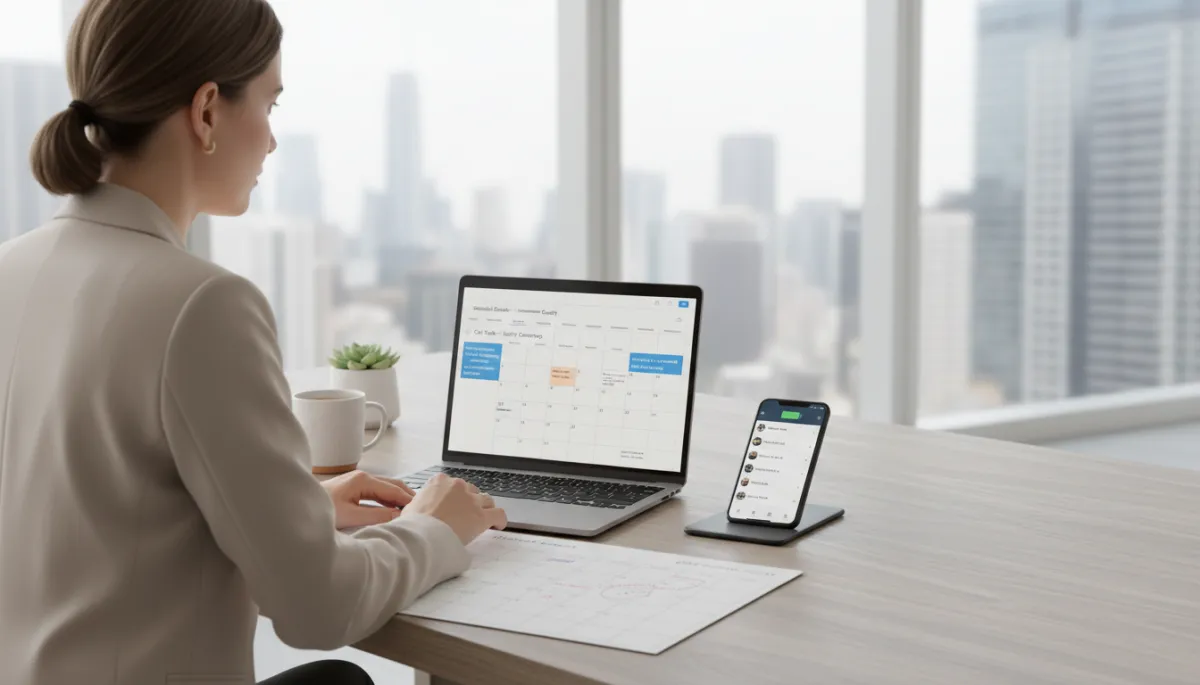
A clear outreach calendar keeps your equity-focused follow-up consistent and professional.
Step 4: Create Lead Magnets That Turn Equity Curiosity into Real Conversations
Equity data helps you find the right people, but you still need compelling reasons for them to raise their hand. That is where lead magnets come in. A strong lead magnet speaks directly to a homeowner’s questions about equity, affordability, and timing—and offers a clear next step that involves you as their advisor.
High-converting move-up lead magnet ideas
- “Equity to Dream Home” report: A personalized, two- to three-page report that shows their estimated equity, likely net proceeds after selling, and several example homes they could comfortably purchase using that equity. This makes the abstract idea of “equity” feel tangible and exciting.
- Move-up buyer playbook: A downloadable guide that walks through financing options, timing strategies, and common pitfalls for selling and buying simultaneously. Include real client stories and sample timelines to demonstrate your expertise and build trust.
- Monthly equity and market insight newsletter: A curated email that combines neighborhood appreciation data, recent move-up case studies, and short educational pieces on topics like “Using Equity Without Draining Your Savings” or “How to Upgrade Without Doubling Your Payment.”
Positioning your lead magnets for maximum response
- Make the benefit explicit. Instead of “Download my guide,” use language like “See exactly what your current equity could buy in today’s market—without committing to sell.”
- Reduce perceived risk by emphasizing that your reports and sessions are consultative, not sales calls. Homeowners are more likely to engage when they feel you are helping them explore options, not pressuring them to list immediately.
- Use your equity data to personalize the offer. For example: “You purchased in 2013 when prices were 40% lower. Want to see how that equity could power your next move?”
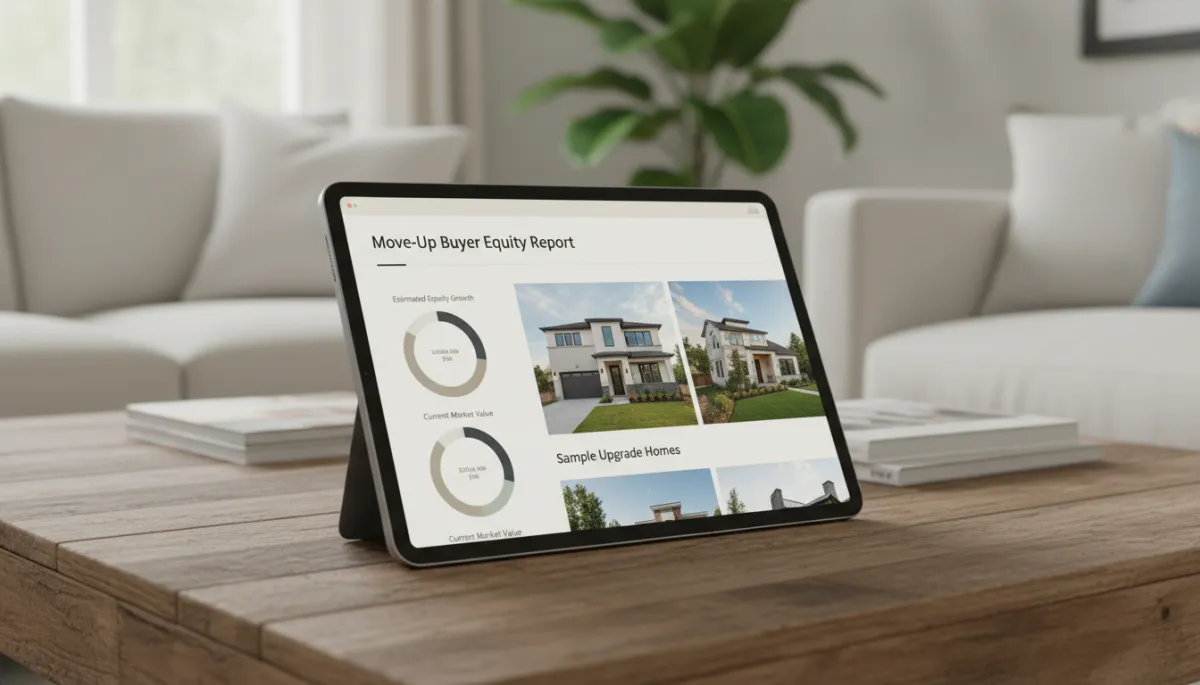
Well-designed equity reports transform vague curiosity into concrete next-step conversations.
Step 5: Conversion Strategies That Turn Equity Insights into Signed Clients
The final piece of your system is what you do once a homeowner engages. Equity data opens the door, but your consultation process, presentation, and follow-up convert interest into listings and purchases. Your goal is to guide them from “I am curious” to “I have a clear plan and I want you to execute it with me.”
The equity and move-up strategy session
- Start with clarity on their goals. Ask open-ended questions about why they are considering a move, what is not working in their current home, and what an ideal next home would look like. This keeps the conversation centered on their life, not just numbers.
- Present a simple equity snapshot. Show current estimated value, likely sale price range, projected net proceeds after fees and payoff, and how that translates into down payment options on potential next homes. Avoid overwhelming them with too many scenarios at once.
- Outline two or three realistic paths. For example: “Sell first, then buy,” “Buy first with a bridge loan,” or “Rent out your current home and buy with a smaller down payment.” Walk through pros and cons, timelines, and risk management for each path.
- End with a clear, low-pressure next step. This might be a pre-approval conversation with a lender, a home preparation walkthrough, or a neighborhood tour of likely move-up options. The objective is to keep momentum without forcing a premature listing decision.
Follow-up frameworks that protect your pipeline
- Add all strategy session attendees to a “Move-Up 6–18 Month” nurture track. This should include quarterly equity updates, occasional check-in calls, and invitations to relevant webinars or events. Many move-up decisions take time; your job is to remain their trusted resource throughout that journey.
- For those who indicate they are 90 days or less from deciding, use a shorter, higher-touch sequence with more frequent calls, texts, and property suggestions. Align your cadence with their stated timeline and keep each interaction focused on moving them one step closer to a clear decision.

Structured equity consultations turn you into a trusted advisor, not just another salesperson.
Putting It All Together: Your Repeatable Move-Up Buyer System
When you combine accurate home equity data, disciplined CRM segmentation, thoughtful outreach cadences, compelling lead magnets, and professional conversion strategies, you create a system that consistently produces high-quality move-up buyer opportunities. Instead of waiting for the phone to ring, you build a proactive engine that surfaces homeowners at the exact moment equity and life stage align.
A simple implementation roadmap for the next 90 days
- Days 1–14: Select your data sources, define your geographic and price-point focus, and build your initial list of homeowners with estimated equity bands and years in home. Import and clean this data in your CRM, creating the core segments described earlier.
- Days 15–30: Draft your first lead magnet (for example, the “Equity to Dream Home” report) and set up a basic monthly outreach cadence for one high-priority segment, such as high-equity, long-term owners. Build email templates, postcards, and call scripts aligned to that cadence.
- Days 31–60: Launch your first campaign, track engagement, and schedule equity and move-up strategy sessions with responders. Refine your consultation process, test different ways of presenting scenarios, and document common questions or objections that arise.
- Days 61–90: Expand your outreach to additional segments, such as growing-family move-up candidates. Add a second lead magnet or event format, like a virtual workshop. Begin measuring conversion metrics and adjusting your cadences and offers based on real-world results.
Over time, this system compounds. Each quarter, more homeowners enter your equity-focused nurture tracks. A percentage of them schedule consultations, and a portion of those become move-up buyers and sellers. Because you are deliberately building this pipeline, your business becomes less dependent on unpredictable online leads and more anchored in relationships built on insight and trust.
Final Thoughts: From Data to Long-Term Relationships
Home equity data is a powerful tool, but it is not an end in itself. The agents who will win the move-up buyer segment in the coming years are those who use data to start better conversations, provide clearer guidance, and design smoother transitions from one home to the next. Your professionalism—expressed through consistent follow-up, thoughtful education, and well-structured strategies—is what ultimately converts equity insights into signed listings and successful closings.
If you commit to implementing even a simplified version of this system, you will begin to see a shift in your pipeline quality. Instead of chasing cold internet leads, you will be advising homeowners who already know you, trust you, and have the financial capacity to make meaningful moves. That is the kind of business that compounds year after year—and it starts with a professional, data-informed approach to building your move-up buyer pipeline today.
